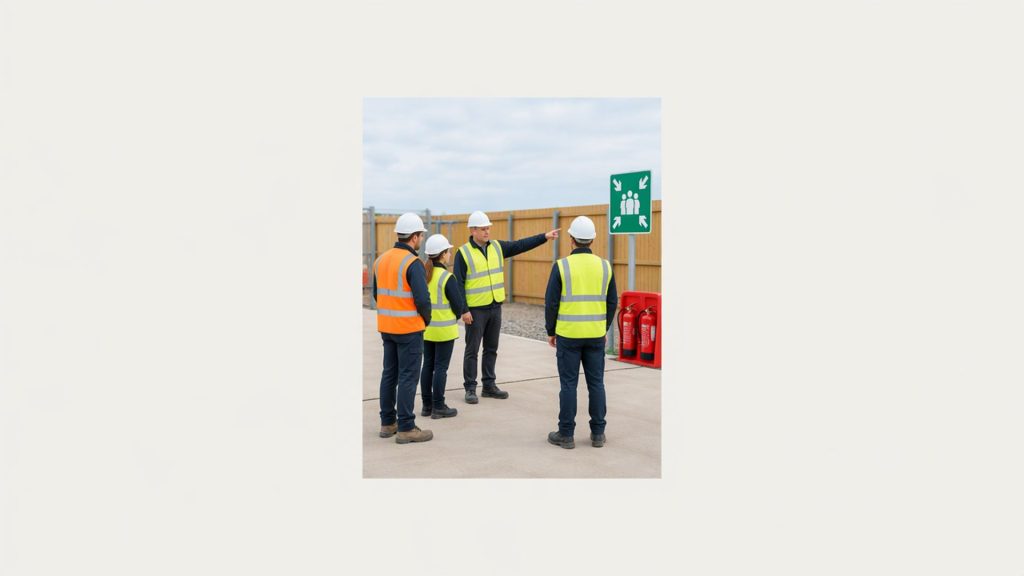
Hotel fire safety training is not just a box for the general manager to tick. A hotel is full of people who are asleep, unfamiliar with the building and often tired after travelling, while night shifts usually run on a skeleton crew. If a fire starts, the first few minutes depend on what the receptionist, housekeeper, porter or night manager does next.
This guide explains what every member of hotel staff in the UK should know about fire safety: the legal basics, what to do when the alarm sounds, the checks worth making on every shift, and what employers need to put in place. Whether you work front of house or manage a team, it will help you prepare before an emergency rather than during one.
Why fire safety in hotels is different
Hotels are classed as sleeping accommodation, and that changes the risk. Guests may not hear or react to an alarm quickly, they rarely know where the nearest exit is, and some will have children, limited mobility or little English. At the same time, one building can contain a commercial kitchen, a laundry, plant rooms and storage areas, each with its own fire hazards.
That is why UK fire authorities publish separate guidance for sleeping accommodation. For staff, the message is simple: know your hotel’s fire procedure inside out, because guests will look to you.
The law in brief
In England and Wales, the key legislation is the Regulatory Reform (Fire Safety) Order 2005. Scotland and Northern Ireland have their own laws built on similar principles. In short:
- Every hotel has a “responsible person” (usually the employer, owner or operator) who must carry out a fire risk assessment and keep it under review.
- Since October 2023, responsible persons in England must record their fire risk assessment in full, along with their fire safety arrangements and the name of the person or organisation that completed it, whatever the size of the business.
- Staff must receive adequate fire safety training when they start, whenever they face new or increased risks, and periodically afterwards, during working hours.
- Employees have duties too: follow the training and instructions, avoid putting others at risk and report anything that looks unsafe.
Rules are updated from time to time, so always check the latest guidance on gov.uk and on your local fire and rescue service’s website.
What to do when the fire alarm sounds
Every hotel has its own evacuation strategy. Some evacuate the whole building at once; others use a phased approach. Always follow your own hotel’s plan. The general principles are:
- Raise the alarm. If you discover smoke or fire, operate the nearest manual call point and alert reception.
- Call 999, or make sure someone has, in line with your procedure.
- Do not use the lifts unless they are designated evacuation lifts and your plan says so.
- Guide guests out by the nearest safe exit, using short, calm and clear instructions. Nobody goes back for luggage.
- Close doors behind you to slow the spread of smoke.
- Go to the assembly point and help with the roll call, using the guest list and the shift’s staff list.
Only tackle a fire with an extinguisher if you have been trained, the fire is small and you have a safe way out. People always come before property.
Every department has a part to play
Reception and night staff
Reception is usually the control point in an emergency: it holds the fire alarm panel, the guest register and details of anyone who needs help to evacuate. At night, with fewer people on duty, everyone must know exactly what their role is.
Housekeeping
Housekeepers are often the first to spot problems: fire doors wedged open, overloaded extension leads, candles, hair straighteners left on, or trolleys blocking escape routes. Report them straight away rather than assuming someone else will.
Kitchen
Hot oil is one of the most dangerous fire risks in any hotel. Never throw water on an oil fire. Commercial kitchens normally have wet chemical (Class F) extinguishers and fire blankets, so make sure you know where they are and how to use them.
Laundry and maintenance
Lint in tumble dryers, oily cloths, chemicals and damaged cables can all start fires. Good housekeeping and prompt reporting prevent a surprising number of incidents.
Quick checks for every shift
- Fire exits and corridors are clear of trolleys, boxes and furniture.
- Fire doors close fully on their own and are not propped open.
- Exit signs are visible and extinguishers are in place.
- You know where the nearest call points are in your area.
- You know whether any guests or colleagues on your shift need assistance to evacuate.
To understand the role of the person who coordinates an evacuation, read our guide to fire marshal duties in the UK.
What employers and managers need to do
For managers and owners, fire safety starts with the risk assessment and is made real by people. Good practice includes:
- Fire safety induction before new starters work alone, especially on night shifts.
- Regular fire drills that include night, part-time and agency staff, not just the day team.
- Trained fire marshals (or fire wardens) on every shift.
- Personal emergency evacuation plans for staff and, where needed, guests who require help.
- Clear training records, for example in a staff training matrix.
For the wider picture, see our guides to health and safety training duties for employers and restaurant staff training in the UK.
How Rafidin Education helps
At Rafidin Education, founder Mirela Simona Anghelache, a John Maxwell Certified Trainer with a strong focus on workplace compliance and safety, has built practical courses for people who work shifts. For hotel teams we recommend:
- Fire Marshal course – coordinating an evacuation, fire prevention and what to do in an emergency.
- Working Safely course – the essentials of health and safety at work.
- Fire Safety and Health & Safety Essentials, in our Health & Safety category.
The benefits: CPD-accredited courses, available in English and Romanian, online at your own pace, with a certificate as soon as you finish. One-to-one consultancy is also available if you want guidance on your next career step.
For employers: we provide B2B training for hotel and restaurant teams, bilingual and easy to follow for international staff, with clear certificate records. Get in touch and we will suggest a package that fits your team.
Don’t wait for a real alarm to find out where the exit is or what your role should be. Take a short course today, reread your hotel’s fire procedure and ask your manager what is expected of you on your shift. And if you work with guests every day, our guide to hotel customer service skills is worth a read too.
Frequently asked questions
Is fire safety training a legal requirement for hotel staff?
Yes. UK fire safety law requires employers to give staff adequate fire safety training when they start, when risks change and periodically after that. How often and in what detail depends on the hotel’s fire risk assessment.
What should I do if a guest refuses to leave their room during an alarm?
Tell them clearly and calmly that they must evacuate, then report their room number to reception or the fire marshal. Do not put yourself at risk by staying behind to persuade them; the fire and rescue service must be told.
Who can be a fire marshal in a hotel?
Any employee appointed by the employer and properly trained. Hotels usually need fire marshals on every shift, including nights, so that someone is always ready to coordinate an evacuation.