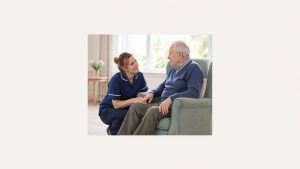
Effective communication in health and social care is about much more than being friendly. It means making sure the person you support understands what is happening, that you understand what they need, and that the right information reaches the next shift. When communication works, people feel safe, accept support more easily and mistakes become less likely.
Communication is Standard 6 of the Care Certificate and sits at the heart of person-centred care. This guide gives you practical techniques you can use on your very next shift: when you greet someone, during personal care, with families and at handover.
Why good communication matters on every shift
Many difficult moments in care start with a misunderstanding: someone refusing a meal because they did not understand what was offered, a relative upset because nobody called them, or a change in medication that was never passed on. Good communication protects three things:
- Dignity – you explain, ask for consent and respect choices.
- Safety – important information (a fall, a temperature, a refused meal) reaches the right person in time.
- Teamwork – everyone works from the same facts, not assumptions.
How to start every interaction
The first few seconds set the tone. A simple routine, repeated every time, makes a real difference:
- Knock and wait for a reply, even if the door is open.
- Give your name and role: “Good morning, I’m Sam, I’m your carer today.”
- Get down to eye level and speak from the front, never from behind.
- Briefly explain what you would like to do and ask if that is okay.
- Allow time to respond. A few seconds of silence is fine.
Consent is not a one-off. Check it at each stage of personal care, especially if the person seems tired, confused or anxious.
Verbal communication skills that work
- Short sentences, one idea at a time: “I’ll help you stand. Then we’ll go to the bathroom.”
- Open questions to find out how someone feels (“How did you sleep?”) and simple choices when they tire quickly (“Tea or coffee?”).
- Active listening: reflect back what you heard (“So your knee has been sore since last night?”).
- No jargon: instead of “I’m doing your obs”, say “I’m going to check your blood pressure and temperature”.
- Check understanding by asking the person to tell you, in their own words, what will happen next.
If English is not your first language, speaking slowly and clearly is a strength, not a weakness. Our guide to everyday English phrases for care workers can help.
Non-verbal communication: what you say without words
Tone of voice, facial expression and body language carry a large part of your message:
- Keep your voice calm and warm, even when the shift is busy.
- Avoid standing over someone; sit or crouch to their level.
- Use touch only with consent and in line with the person’s preferences.
- Watch for signals: a tense face, clenched hands or looking away can mean pain, fear or refusal.
Supporting people with communication needs
Some people live with hearing or sight loss, dementia, aphasia after a stroke, a learning disability or autism. In England, NHS and publicly funded adult social care services must follow the Accessible Information Standard: identify, record, flag, share and meet each person’s information and communication needs. On shift, that means:
- Read the care plan – it should say how the person communicates best.
- Check hearing aids are working and glasses are clean.
- Use pictures, objects of reference or gestures when words are not enough.
- Reduce background noise: turn the TV off before an important conversation.
For specific situations, see our guides on communicating with autistic people and dementia care for carers. If you are unsure whether someone can make a particular decision, read our Mental Capacity Act guide for care workers.
Handover and communicating with your team
A good handover is short, clear and complete. Many services use a structured tool such as SBAR (Situation, Background, Assessment, Recommendation). Even without a formal model, you can follow the same logic:
- What has changed for the person during your shift.
- What you observed (food, fluids, sleep, skin, mood).
- What you did and who you reported to.
- What the next shift needs to watch.
Record facts only in the care notes, with the time and your signature. Report any worrying change to the senior or nurse in charge straight away, not just at the end of the shift.
Talking with families
Relatives often know the person’s history and routines best. Listen respectfully, note useful information and pass it to the team. Protect confidentiality, though: if you are unsure what you can share, refer the family to the shift lead, and avoid making promises you cannot keep.
How Rafidin Education helps
Our Effective Communication in Care course and the wider Health and Social Care category prepare you for real situations on shift. Combine them with your mandatory training for care workers, or browse all available courses.
- CPD-accredited – certificates recognised by UK employers.
- Bilingual (English/Romanian) – learn in the language you understand best.
- Online, at your own pace – between shifts, on your phone or laptop.
- Instant certificate on completion.
- 1:1 guidance on your career through our consultancy service.
- Team training – B2B packages for care homes and home care providers.
Communication is a skill you can learn and practise. Pick one habit from this guide, use it for a week and notice the difference. When you are ready to go further, start a Rafidin course and turn every shift into a chance to grow.
Frequently asked questions
What is effective communication in health and social care?
It is sharing information in a way the person can understand, listening to what they need and passing accurate information to colleagues, while respecting dignity, consent and confidentiality.
Which Care Certificate standard covers communication?
Standard 6 – Communication. It covers verbal and non-verbal communication, meeting individual communication needs and handling information confidentially.
What are the barriers to communication in care?
Common barriers include hearing or sight loss, dementia, language differences, noise, pain, tiredness and the use of jargon. Your job is to spot them and adapt how you communicate.