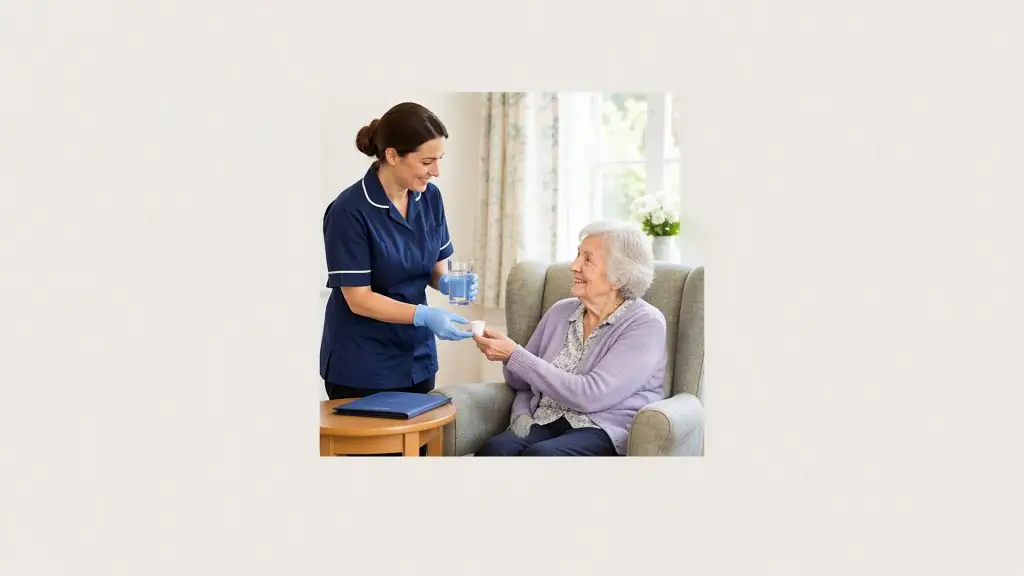
Good nutrition and hydration in elderly care can sound like the most basic part of the job, yet it is one of the most important. A drink offered at the right moment, a favourite snack or an accurate entry on a fluid chart can help prevent falls, confusion, urinary infections and hospital admissions. For care workers, it means daily attention, not simply “serving lunch”.
Over more than 11 years in UK care, Mirela Simona Anghelache has seen many times how someone who is “not quite themselves” improves once the team notices they have not been drinking enough. This guide explains what to look out for on every shift, which warning signs you should never ignore and how to record food and fluid intake properly.
Why older people are at higher risk
As we age, our sense of thirst weakens, so many older people drink less than they need without realising it. Some cut back on drinks because they worry about needing the toilet, or because getting there is difficult. Other common factors include:
- dementia, which can mean forgetting to eat or drink, or not recognising food;
- swallowing difficulties (dysphagia), dental problems or ill-fitting dentures;
- some medicines that reduce appetite or increase fluid loss;
- loneliness, low mood or a lack of enjoyable mealtime routines;
- reduced mobility, which makes a drink on the table hard to reach.
Your role is not just to bring the tray, but to make sure the person actually eats and drinks, at a pace and in a way that suits them.
Signs of dehydration every carer should know
Dehydration can build up gradually and is easy to mistake for “an off day”. Watch for:
- dark, strong-smelling urine or fewer trips to the toilet;
- a dry mouth and lips, tiredness or headaches;
- dizziness, weakness and a higher risk of falling;
- new or worsening confusion, or agitation;
- constipation.
Sudden confusion in an older person should never automatically be put down to dementia. It may be a sign of dehydration or infection. It is not your job to diagnose: report it straight away to the senior carer, nurse or shift lead, following your organisation’s procedures. Our guide to falls prevention for older people explains how this links to safety.
Spotting malnutrition and the role of screening
Malnutrition does not only affect people who look very thin. It can develop in someone who seems fine but is gradually eating less. Look out for:
- clothes, rings or dentures becoming loose;
- plates repeatedly coming back half full;
- tiredness, muscle weakness or wounds that heal slowly;
- loss of appetite or refusing certain foods.
Many UK care homes and services use nutritional screening, most commonly MUST (the Malnutrition Universal Screening Tool developed by BAPEN), alongside regular weighing. Screening is usually carried out by trained staff, but your everyday observations are what pick up the first changes. If you notice someone eating or drinking less, tell the team that same day.
Practical steps for every shift
- Read the care plan. Check preferences, allergies, special diets, the recommended texture of food and drinks, and any fluid restriction set by the clinical team.
- Offer drinks little and often. Keep a drink within reach, ask what the person fancies and offer choice: water, tea, milk or squash.
- Remember foods that count towards hydration. Soup, fruit, yoghurt and jelly can all help, as long as they suit the person’s diet.
- Make mealtimes pleasant. Sit the person upright, avoid rushing and reduce distractions. Support only as much as needed, to protect independence and dignity.
- Use the right equipment. Two-handled cups, plate guards, adapted cutlery or coloured plates can help, particularly for people living with dementia.
- Record what was actually consumed. Not what you served, but what the person ate and drank.
For more ideas on supporting people with dementia at mealtimes, see our dementia care guide for carers.
Swallowing difficulties and modified diets
If someone coughs or chokes while eating, has a “wet” sounding voice after drinking or holds food in their mouth for a long time, they may have swallowing difficulties. Report it immediately. Assessment is carried out by a specialist, usually a Speech and Language Therapist (SLT), who may recommend modified textures for food and drinks, generally described in the UK using the international IDDSI framework.
The rule for you is simple: follow the texture in the care plan exactly, and never offer “just a little taste” of something that has not been recommended. If you think someone’s medicines may be affecting their appetite or hydration, raise it with the team. Our guide to medication administration for care workers explains your responsibilities.
Food and fluid charts: recording it properly
In England, care providers must meet people’s nutrition and hydration needs under CQC Regulation 14. For you, that means clear, accurate records. When someone has a food and fluid chart:
- record entries at the time, not at the end of your shift;
- write down the actual amount consumed, not the amount offered;
- note any refusals and the reason, if known;
- report when the daily total falls below the target in the care plan.
A well-kept chart helps the team spot problems early. These skills are part of every care worker’s core learning, covered in our overview of mandatory training in care in the UK.
How Rafidin Education helps
Rafidin Education offers online courses for care workers, designed around everyday practice in UK care settings. Courses such as Professional Care Excellence, Effective Communication in Care and End of Life Care help you understand people’s needs more fully, including around mealtimes and hydration. You will find them in our Health and Social Care section and in the full course catalogue.
- CPD accredited – recognised learning for your professional development;
- Bilingual RO/EN – learn in the language you feel most confident in;
- Online, at your own pace – fit learning around shifts, on your phone or laptop;
- Instant certificate – ready for your training records as soon as you finish;
- 1:1 consultancy – personal career support through our consultancy service;
- B2B training – packages for care home and agency teams.
A drink offered at the right time can change someone’s whole day. If you want to be the carer your team relies on, start a Rafidin course today and build your confidence step by step. Have a question? Get in touch and we will help you choose the right course.
Frequently asked questions
How much should an older person drink each day?
General UK guidance suggests around 6 to 8 glasses of fluid a day for adults, but individual needs vary. Always follow the target and any restrictions in the person’s care plan, set by the clinical team.
What should I do if someone refuses food or drink?
Never force them. Try again later, offer alternatives or smaller portions and ask what they would enjoy. Record the refusal and let the team know, especially if it keeps happening.
Can sudden confusion be a sign of dehydration?
Yes, it can be one sign, but it can also have other causes, such as an infection. Do not try to diagnose it yourself: report the change straight away to the senior carer, nurse or manager.