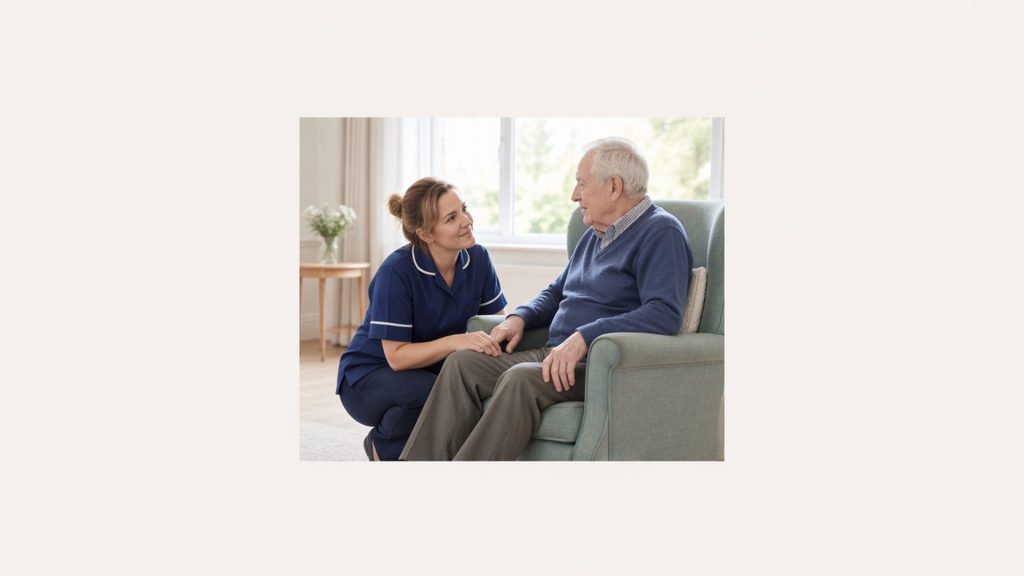
Falls prevention for older people is one of the most important parts of any care worker’s role. A single fall can change an older person’s life: a broken hip, a long hospital stay, lost confidence and, often, lost independence. The good news is that many falls can be prevented through daily attention, simple routines and a team that communicates well.
This guide explains why older people fall, which risk factors to look out for on every shift, how to make rooms and routines safer, and exactly what to do if someone has fallen. It is practical, general guidance for anyone working in care homes, domiciliary care or hospitals in the UK.
Why falls matter so much in care
NICE’s updated 2025 guideline on falls (NG249) notes that around one in three people aged 65 and over, and half of those over 80, fall at least once a year. In England in 2022/23 there were roughly 210,000 emergency hospital admissions for falls among people aged 65 and over.
Falls are the most common cause of fragility fractures, and a hip fracture can have serious long-term consequences. Alongside physical injury, many people develop a fear of falling: they move less, lose strength, become isolated, and their risk rises even further. So good falls prevention is not about keeping people still. It is about helping them move safely.
Key risk factors to watch for
The biggest single risk factor for a fall is a previous fall, so take extra care with anyone who has fallen before. Other common factors include:
- Mobility and balance problems – arthritis, muscle weakness, stroke or Parkinson’s.
- Medication – especially taking several medicines, or ones that can cause dizziness or drowsiness. Report any change in behaviour after a new medicine.
- Poor eyesight – dirty or wrong glasses, or glasses left out of reach.
- Confusion and dementia – the person may forget to ask for help or to use their walking frame. See our dementia care guide for carers.
- Urgent toilet needs, particularly at night.
- Dehydration and missed meals, which can lead to dizziness and weakness.
- Environmental hazards – loose rugs, trailing cables, wet floors, poor lighting and slippers without grip.
A quick environment check for every shift
A safe environment cuts risk dramatically. Build these checks into the start and middle of each shift:
- Floors are dry and clear of cables, bags, clothes and clutter.
- The bed is at the right height with brakes on; chairs are stable.
- Call bell, glasses, a drink and personal items are within easy reach.
- Lighting is good, with a low night light on the way to the toilet.
- Walking frames and sticks are close by, in good condition and used correctly.
- Footwear is enclosed, well fitted and non-slip.
Always use equipment exactly as the care plan says and as you were trained. Safe transfer techniques are covered in our guide to moving and handling in care.
Daily routines that prevent falls
What you do with the person each day matters just as much as the room:
- Encourage safe movement. NICE highlights strength and balance exercise. Support activities recommended by the physiotherapist rather than replacing walking with a wheelchair.
- Offer regular toilet visits, so nobody rushes alone, especially at night.
- Keep up fluids and regular meals to reduce dizziness.
- Stand up slowly – sit on the edge of the bed for a moment before standing.
- Carry out regular checks, especially for people who are confused or unlikely to use the call bell.
- Respect independence. Explain, offer support and let people do as much as they safely can.
What to do if someone falls
Always follow your organisation’s falls policy. The general steps are:
- Stay calm and do not rush to lift them. Lifting too quickly can make a fracture or injury worse.
- Call for help from a colleague or senior, and check the person is responsive and breathing.
- Look for signs of injury: pain, bleeding, a head injury, a shortened or rotated leg, or new confusion. If there are serious signs or a head injury, call 999 in line with your procedure.
- Keep them warm and reassured until the team decides how to help them up, using the right equipment and trained staff.
- Report and record: complete an incident form and inform family and the GP as your procedure requires. Every fall should be reviewed so the falls risk assessment can be updated.
- Monitor them over the following hours, as some injuries only show later.
Teamwork and communication
Many falls are avoided simply because information is shared. At handover, mention if someone has been dizzy, confused, eating poorly or started a new medicine. Record changes clearly and ask for the falls risk to be reassessed. Preventing falls is also part of protecting vulnerable adults, which we cover in our guide to safeguarding adults in care.
How Rafidin Education helps
Rafidin Education offers online courses that prepare you for real situations in care, including falls prevention and safe moving and handling:
- Working Safely – risk assessment and creating a safe working environment.
- End of Life Care – compassionate, dignified support for people with complex needs.
- Moving and handling, dementia awareness and infection control are part of our mandatory training for care in the UK.
- Browse every course in our Health and Social Care category.
Your benefits: CPD-accredited courses, available in English and Romanian, online and at your own pace, with an instant certificate on completion. You can also book 1:1 career consultancy, and employers can train whole teams through our B2B packages. Read more about our CPD accreditations.
Ready to feel safer and more confident on every shift? Choose your next course from our full course catalogue or get in touch and we will help you build the right training plan for you or your team.
Frequently asked questions
Should I lift someone who has fallen on my own?
No. First check for injury and call for help. Only help the person up after an assessment, using the right equipment and trained staff, in line with your organisation’s policy.
Do I need to report a fall if the person seems fine?
Yes. Every fall should be reported and recorded, even with no visible injury. Some injuries appear later, and each report helps the team update the falls risk assessment.
Which training helps most with falls prevention?
Moving and handling training is the foundation, supported by dementia awareness and working safely. Together they cover technique, understanding the person and keeping the environment safe.