Do you work in a kitchen, café, hotel or care home where you help with meals? Then you have almost certainly been asked about a Level 2 food hygiene certificate. It is the qualification UK employers most often ask for from anyone who handles food, from chefs and kitchen assistants to care workers preparing breakfast for residents.
This guide explains what Level 2 food hygiene actually covers, what UK law says, who needs it, what you will learn and how it can strengthen your job applications. No jargon, just what you need to know.
What is Level 2 food hygiene?
Level 2 Food Hygiene (often called Level 2 Food Safety and Hygiene) is the standard level of training for anyone who prepares, cooks, serves or stores food at work. Level 1 suits people handling low-risk or pre-packaged food, while Level 3 is designed for supervisors and managers who are responsible for the whole team’s food safety procedures.
In short, Level 2 teaches you how to prevent food-borne illness: how bacteria grow, how contamination happens and how to keep food safe from delivery to the plate.
Is a food hygiene certificate a legal requirement in the UK?
This is where most confusion comes from. According to the Food Standards Agency (FSA), the law requires food handlers to be supervised and instructed or trained in food hygiene in a way that matches the work they do. It does not require a specific certificate: training can come from on-the-job learning, self-study or relevant previous experience.
In practice, though, most hospitality and care employers ask for a Level 2 certificate, because it is the simplest way to show an inspector that staff have been properly trained. Food business owners and managers must also have suitable food safety training themselves.
Who needs Level 2 food hygiene training?
The course is a good fit for anyone who touches open food or prepares food for other people, including:
- Chefs, kitchen assistants and kitchen porters in restaurants, cafés, pubs and hotels;
- Front-of-house and bar staff who serve or prepare food and drinks;
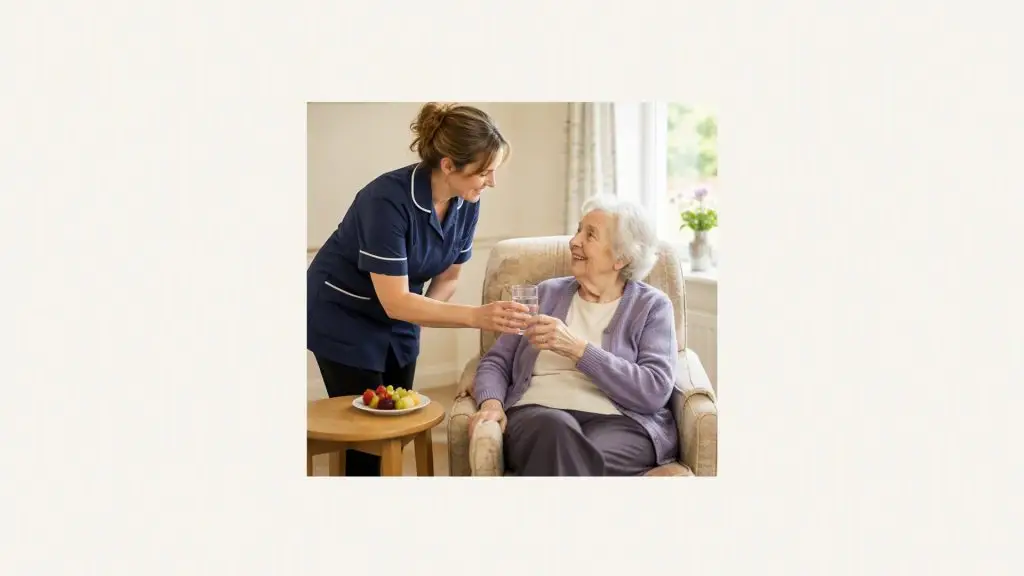
- Care workers in care homes and domiciliary care who prepare meals, snacks or drinks for the people they support;
- School, nursery and hospital catering staff;
- Street food, event catering and delivery workers;
- Small business owners starting a home baking or food business.
If you are applying for care roles, the certificate shows you can support nutrition and hydration, which matters enormously for older people. Read our guide to care assistant jobs in the UK for the wider picture.
What you will learn
A good Level 2 course covers the same areas an Environmental Health Officer looks at during an inspection:
- The 4Cs promoted by the FSA: cleaning, cooking, chilling and avoiding cross-contamination;
- Types of hazard: biological (bacteria, viruses), chemical (cleaning products), physical (plastic, glass) and allergenic;
- Personal hygiene: effective handwashing, protective clothing and what to do if you are unwell;
- Temperature control for storage, cooking, hot holding and reheating;
- The 14 major allergens and how to give customers or residents accurate information;
- Cleaning and disinfection of surfaces and equipment, plus pest control;
- Record keeping: why temperature logs and written procedures matter.
Why it matters for employers and for you
For employers, a trained team means lower risk and a better result under the Food Hygiene Rating Scheme, the 0 to 5 score you see in the windows of many cafés and restaurants. Local authority inspectors look at how staff are trained and supervised. Displaying the rating is a legal requirement in Wales and Northern Ireland, and a low score can put customers off anywhere.
For you, the certificate is a practical boost to your CV: it shows you are ready from day one and that your employer will not have to start your training from scratch. If you are updating your CV, see our UK care assistant CV example.
How long does a Level 2 food hygiene certificate last?
There is no legal expiry date. However, many employers and training providers recommend a refresher roughly every three years, or sooner if regulations, your role or kitchen procedures change. Check your employer’s policy, especially in care, where mandatory training is refreshed regularly. Find out more on our mandatory training for care page.
How Rafidin Education helps
At Rafidin Education you will find Level 2 Food Hygiene in our Health and Safety category, alongside other workplace essentials such as Working Safely and Fire Safety. What you get:
- CPD accreditation recognised by UK employers (see our CPD accreditations);
- Bilingual learning (English/Romanian), ideal for multilingual teams;
- Online and self-paced, on your phone or laptop, between shifts;
- Instant certificate on completion, ready to add to your CV;
- 1:1 consultancy on CVs, applications and next career steps through our consultancy service;
- B2B training for teams: restaurants, hotels and care homes can train all their staff in one place.
Ready to get certified? Choose the food hygiene course in our Health and Safety category or browse all Rafidin courses. Training a whole team, or not sure which course is right for you? Get in touch and we will help you choose.
Frequently asked questions
Do I legally need a Level 2 food hygiene certificate to work with food?
No. The law requires food handlers to be supervised and instructed or trained to a level that suits their work, but it does not require a specific certificate. Most employers still ask for one because it is the clearest evidence of training.
Do care workers need food hygiene training?
If you prepare meals, snacks or drinks for the people you support, food hygiene training is highly relevant and often required. Check your employer’s training policy.
What is the difference between Level 2 and Level 3 food hygiene?
Level 2 is for people who handle food directly. Level 3 is for supervisors and managers who oversee food safety procedures and train their teams.